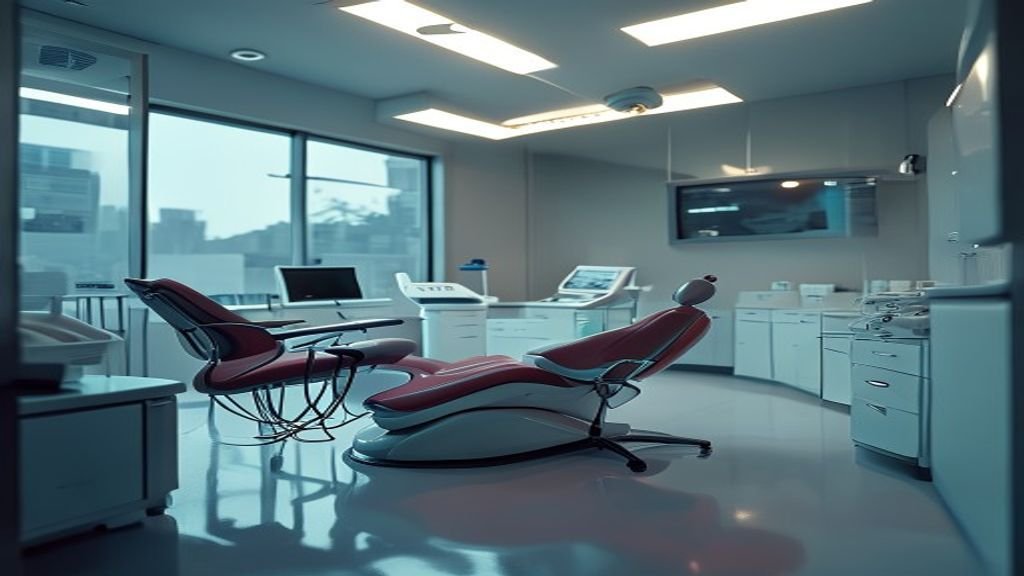

I Need a Website for My Dental Clinic — Now What?
Everything you need to know to build a dental website that actually brings in patients — from cost to design to ranking on Google.
Your Dental Clinic Is Invisible Without a Website, And It’s Costing You Patients Every Single Day
Picture this: someone moves into your neighbourhood. Their tooth is aching. They pick up their phone, type “dentist near me,” and scroll through the results. Three clinics appear with professional websites, team photos, reviews, and a big green “Book Now” button. Yours doesn’t appear at all or worse, it shows up with no website link, no photos, and a half-empty Google profile from 2019.
They book with one of the three. You just lost a patient who may have stayed with your practice for the next 20 years, and brought their whole family.
This guide is written specifically for dentists, clinic owners, and practice managers who know they need a website but aren’t sure where to start, what it should include, how much it will cost, or who should build it. By the time you finish reading, you’ll have a complete picture and a clear next step.
A dental clinic website is a professional online platform that helps patients find your clinic, understand your services, verify your credentials, and book appointments, all before ever calling you. It is your most powerful, always-on patient acquisition tool.
Why Every Dental Clinic Needs a Professional Website in 2026
Having a Facebook page is not a website. Having a Google Maps listing is not a website. These are supporting channels , but without a professional website at the centre, you are building your practice on rented land that can change its rules overnight.
Patients Google you before they call you
The patient journey in 2026 starts with a search engine, not a phonebook. When someone types “dentist in [your city]” or “teeth whitening near me,” Google returns results ranked by a combination of website quality, SEO, and local signals. If you have no website , or a poor one , you simply don’t exist in that moment of decision.
Even when a patient gets your number from a friend’s recommendation, they will still Google you before calling to look at your reviews, see photos of your clinic, and confirm you’re the kind of practice they feel comfortable visiting. What do they find when they search your name right now?
Your website works 24 hours a day, 7 days a week
Your receptionist goes home at 6pm. Your website doesn’t. Every night while your clinic is closed, potential patients are searching for dental services , a cracked tooth after dinner, a nervous parent researching braces for their child at midnight, someone booking their annual checkup on Sunday morning. A website with online booking captures all of these enquiries automatically, without any staff involvement.
Real impact: Dental practices with 24/7 online booking report that 30–40% of their appointments are booked outside of business hours. Every one of those bookings would have been lost without a website.
A website builds trust before the first visit
Dental anxiety is one of the most common phobias in the world. Patients , especially new ones , are nervous. They want to know who is going to be treating them before they walk through your door. A professional website with real photos of your team, your clinic, your equipment, and your before/after results dramatically reduces that anxiety and increases the likelihood they’ll actually show up.
Your website is the place to display your qualifications, your years of experience, your memberships in dental associations, and genuine patient testimonials. This isn’t vanity , it’s the foundation of trust in a sector where trust is everything.
Local SEO , your website is how Google finds you
Google’s algorithm for showing local businesses in search results depends heavily on whether you have a website, how good that website is, and whether it’s properly optimised for your location and services. Your Google Business Profile (the listing that appears on Maps) and your website work together as a pair , each one strengthens the other. Without a website, you are competing with both hands tied behind your back.
What Must a Dental Clinic Website Include? The Non-Negotiables
A dental website is not just a digital brochure. Every element should have a purpose: either helping a patient decide to book, making it easy for them to book, or helping Google understand what you do and where you do it. Here is what every dental website must have.
Quick Answer , Pages a Dental Website Needs
Homepage · Individual service pages · Online booking · Meet the team · Patient reviews · Before & after gallery · Contact with map & hours · Blog (for SEO). Each page serves a specific role in converting a visitor into a booked patient.
Homepage that converts visitors into patients
Your homepage has one job: convince a visitor to take the next step, whether that’s booking an appointment, calling your clinic, or exploring a service. Within three seconds of landing on your page, a visitor should know exactly who you are, where you are, and what you offer. The most important element above the fold , before any scrolling , is a clear headline, your phone number, and a prominent “Book Appointment” button.
Use real photos of your actual clinic and actual team, not stock photography. Patients can smell stock photos immediately, and they erode trust rather than build it. A single genuine photo of your reception area is worth more than a dozen perfect shutterstock images.
Individual service pages for every treatment you offer
This is where most dental websites fail. They list all their services on a single page in a bullet-point list. This is a wasted opportunity both for patients and for SEO. Each major service , general dentistry, teeth whitening, veneers, dental implants, Invisalign, root canals, emergency dentistry , deserves its own dedicated page.
Why? Because when someone searches “dental implants in [your city],” Google needs a page specifically about dental implants to rank. A generic services page will never rank for individual treatments. Each service page should explain what the treatment is, who it’s right for, what the process looks like, and how to book.
Online appointment booking system
In 2026, an online booking system is no longer a premium feature , it is an expectation, especially among patients under 45. The ability to book an appointment without making a phone call is a significant conversion driver. Options range from simple integrations like Calendly to healthcare-specific platforms that sync with your clinic management software.
A good booking system also sends automatic reminders to patients before their appointment, which has been shown to reduce no-show rates by up to 40%. That alone often pays for the cost of the entire website.
Meet the team page , the most underrated page on any dental site
Patients are not choosing a clinic. They are choosing a dentist. The “Meet the Team” page consistently shows up as one of the most visited pages on any healthcare website. Include a professional photo of every dentist and key staff member, their full name, their qualifications, and ideally a short personal note about their approach to patient care. A brief human detail , “Dr. Ahmed is a father of two and coaches weekend football” , makes a dentist feel like a person rather than a title.
Patient reviews and testimonials
Social proof is the most powerful force in healthcare marketing. Embed your Google Reviews directly on your website so they display in real time. Add a dedicated testimonials section with written reviews from patients (with their permission). If you can get even two or three short video testimonials, the impact on conversion is extraordinary , people trust people.
Before-and-after photos for cosmetic treatments are equally powerful, provided you have written patient consent. These visual transformations speak louder than any marketing copy you could write.
Contact page with map, hours, and directions
Your contact page should make it impossible to get lost. Include your full address, an embedded Google Map, your phone number (clickable on mobile), your opening hours for every day of the week, and clear directions for patients arriving by car or public transport. If you have parking available, mention it , it removes a practical barrier to booking.
Mobile-first design
Between 60% and 70% of all dental searches now happen on mobile phones. If your website is not perfectly usable on a phone screen , fast loading, easy navigation, tap-friendly buttons, readable text without zooming , you are actively turning away the majority of your potential patients. Google also ranks mobile-friendly websites higher in search results, so this is simultaneously a user experience and an SEO issue.
Privacy compliance
Any website that collects patient information , through contact forms, booking systems, or even just tracking cookies , needs to comply with relevant privacy laws. This includes a clear Privacy Policy page, a cookie consent notice where required, and secure HTTPS encryption (signalled by the padlock in the browser address bar). These are not optional extras , they are legal requirements and trust signals.
How Much Does a Dental Clinic Website Cost?
Let’s break down exactly what you get at each level of investment, and more importantly, what you give up when you try to cut corners.
What drives the price and what you should never skip
The biggest factors that increase a website’s cost are: custom photography sessions, booking system integrations, local SEO configuration, the number of service pages, and ongoing maintenance contracts. The temptation is always to strip these down to save money. Here is the honest truth about what that costs you:
The ROI calculation every dentist should run
The average lifetime value of a dental patient , considering regular checkups, occasional treatments, and family referrals , ranges from $2,000 to $10,000 or more over the course of the relationship. A well-built dental website that brings in just one new patient per month from organic search pays for itself in the first week of that patient’s relationship with your practice.
Think of it this way: Your website is not a cost. It is a patient acquisition system with a one-time setup fee and a monthly operating cost that is a fraction of what you’d pay for a single Google Ads campaign , while delivering leads indefinitely.
How to Choose the Right Platform for Your Dental Website
The platform your website is built on affects everything: how fast it loads, how well it ranks on Google, how easy it is to update, and how much it costs to maintain. Here’s an honest breakdown of your options.
WordPress , the best choice for serious SEO
The majority of professional dental websites that rank well on Google are built on WordPress. It powers over 40% of all websites on the internet, has the most extensive SEO plugin ecosystem (including Yoast and Rank Math), and gives your developer full control over every technical detail. It does require professional setup and ongoing maintenance, but the SEO ceiling is higher than any other platform. If long-term organic patient growth is your goal, WordPress is the answer.
Wix / Squarespace , suitable for simple, new practices
These drag-and-drop builders are genuinely much easier to use and require no technical knowledge. If you are a newly opened solo practice with a tight budget and just need a professional-looking 4–5 page website to establish your online presence while you grow, these platforms work. The important caveat is that their SEO capabilities have real limitations, and you will hit a ceiling when trying to compete for high-volume keywords in competitive cities.
Dental-specific platforms
Companies like Doctorlogic, Dental Intel, and Smile Marketing offer all-in-one packages built specifically for dental practices, often including website, booking, and patient management features in a single subscription. These can be a good fit for larger multi-location practices. They tend to be more expensive, less flexible in design, and you are dependent on the vendor for everything. Review contracts carefully , some lock you in to long agreements and you don’t own the website if you leave.
SEO for Dental Websites , How to Actually Show Up When Patients Search
Having a beautiful website that nobody can find is like opening a dental clinic in a basement with no signage. SEO , Search Engine Optimisation , is the process of making your website visible to Google when patients search for dental services in your area. Here’s what it actually involves.
Local SEO: the heart of dental marketing
Dental SEO is fundamentally local SEO. Your target patient is not in another country , they are within 10 kilometres of your clinic. That means your website needs to be optimised for location-specific search terms like “dentist in [suburb],” “dental implants [city],” or “emergency dentist open Saturday [area].”
Your Google Business Profile must be fully completed and connected to your website. Your name, address, and phone number must be identical across your website, your Google profile, and every other directory listing on the web. Even small inconsistencies , “St” vs “Street” , confuse Google and hurt your ranking.
On-page SEO for every service page
Each page on your website needs to be optimised individually. This means a descriptive title tag (the text that appears on the browser tab and in Google results), a compelling meta description (the text shown under your link in search results), a clear H1 heading, and content that uses the terms your patients actually search for. Your “Dental Implants” page, for example, should mention your city name, answer common patient questions about implants, and include schema markup that tells Google this is a healthcare service page.
The power of a dental blog for long-term traffic
Every question a patient types into Google is an opportunity for your website to appear. “How long do veneers last?” “Is teeth whitening safe during pregnancy?” “What’s the difference between Invisalign and braces?” These are real searches happening every day. A blog that answers these questions draws in patients who are in the early stages of considering treatment , and when they’re ready to book, your name is already familiar to them.
Consistent blogging also signals to Google that your website is active, authoritative, and regularly updated , all factors that improve your overall ranking.
Technical SEO , the foundation everything sits on
Technical SEO covers the behind-the-scenes factors that affect how Google crawls and ranks your website. The most important ones for dental websites are page speed (Google’s Core Web Vitals standard), mobile responsiveness, HTTPS security, proper URL structure, and an XML sitemap that tells Google every page on your site. These should all be configured by your developer before your website goes live , retrofitting them later is significantly more expensive and time-consuming.
Key insight: A one-second delay in page load time results in a 7% reduction in conversions. For a dental website, that could mean the difference between a patient booking or hitting the back button to your competitor.
Building local authority over time
Google ranks websites it considers authoritative. Authority in SEO terms comes partly from other websites linking to yours. For a local dental practice, the best sources of links are: local business directories (Yelp, Healthgrades, Zocdoc), your national dental association’s member directory, any local press coverage, and partnerships with other local health providers. Each link from a credible source is a vote of confidence that improves your ranking.
Design Principles That Make Patients Trust You and Book
Design is not about making things look pretty. In healthcare, design is about communicating trustworthiness, competence, and warmth before a single word is read. Here is what separates dental websites that convert visitors into patients from those that don’t.
Colours, typography, and imagery that reduce dental anxiety
Healthcare colour psychology is well-studied. Soft teals, blues, and clean whites communicate cleanliness, professionalism, and calm, which is exactly what anxious dental patients need to feel. Avoid overly aggressive or high-contrast colour schemes. Choose a font that is modern and readable, not decorative. And most critically: use real photos of your actual people and your actual space. Generic stock images of impossibly perfect smiles and pristine fake dental offices have become a cliché that patients have learned to distrust.
Clear calls-to-action: where, how many, and what they say
Every page on your website should make it obvious what the visitor should do next. The primary CTA, usually “Book an Appointment” or “Call Us Now”, should appear in the header on every page so it’s always visible regardless of how far down the page someone has scrolled. It should also appear at the end of every service page and in the footer. Secondary CTAs (“Learn about our services,” “Meet our team”) guide visitors who aren’t quite ready to book toward more information.
For younger demographics, a WhatsApp chat button or live chat widget can significantly increase enquiries, many people under 35 strongly prefer messaging over phone calls.
Accessibility, reaching every patient
ADA (Americans with Disabilities Act) and international equivalents require that websites be usable by people with visual, auditory, or motor impairments. In practical terms this means: sufficient colour contrast between text and background, descriptive alt text on all images, keyboard navigability, and videos with captions. Beyond legal compliance, accessibility makes your website usable by a wider audience, including elderly patients who may have difficulty with small text or low contrast.
DIY vs. Hiring a Professional, What’s Actually Right for Your Clinic?
This is the question every dentist eventually faces. And the honest answer depends on three things: your budget, your timeline, and how seriously you want to compete for new patients online.
When building it yourself makes sense
DIY website builders like Wix or Squarespace have genuinely gotten much better. If you are just opening your practice, have an extremely tight budget, and just need something online so you’re not completely invisible, a DIY site can work as a temporary measure. The hidden cost, however, is your time, hours spent learning a platform, designing pages, and writing content are hours not spent treating patients. And the SEO limitations of these platforms mean you will likely plateau quickly.
The DIY trap: Many dentists spend 40+ hours building a DIY website, then wonder why it brings in no patients. Without proper SEO setup, keyword research, and technical configuration, a beautiful website is still invisible to Google. Good design and good SEO are two separate skills, and both are required.
What to look for when hiring a dental website professional
Not every web developer understands the specific needs of a dental practice. When evaluating agencies or freelancers, look for these signals:
10 Questions to Ask Before you Hire Anyone
How Long Does It Take to Build a Dental Website?
Direct Answer
A professional dental website takes between 5 days and 25 days to build, depending on the complexity and package chosen. The biggest cause of delays is not the developer, it’s waiting for content, photos, and approvals from the clinic.
Realistic timelines by package
Package | Typical Timeline | Main Variables |
Starter (5 pages) | 5–7 Days | Content and photos ready at the start |
Growth (booking + SEO) | 10–14 Days | Booking system integration and SEO configuration |
Pro (full automation) | 20–25 Days | AI receptionist setup, automation flows, testing |
What causes delays and how to avoid them
The single biggest cause of website project delays is waiting on content from the client. Before you brief a developer, prepare the following so the project can move at full speed from day one:
- High-resolution logo in PNG or SVG format
- Professional photos of your clinic, team, and equipment
- Full list of services with a paragraph description of each
- Team member names, qualifications, and short bios
- Your clinic’s address, phone, email, and opening hours
- 3–5 written patient testimonials (with consent)
- Your booking system login details or preference
- Any branding guidelines or colour preferences
Clinics that arrive with all of this content prepared consistently get their websites launched at the fast end of the timeline estimate. Those who gather it during the build process routinely extend the timeline by two to four weeks.
What a Great Dental Website Looks Like, and the Mistakes to Avoid
You don’t need to be a designer to recognise a dental website that works. Great dental websites share a set of consistent characteristics regardless of their aesthetic choices. And the mistakes that sink average dental websites are equally consistent, and avoidable.
Characteristics of high-performing dental websites
- The phone number and “Book Now” button are visible without scrolling on every device
- The homepage headline clearly states the clinic name, location, and primary specialisation
- Real photography is used throughout, team, clinic interior, treatment rooms
- The website loads in under 3 seconds on a mobile connection
- Patient reviews are prominently displayed with real names and star ratings
- Each service has its own dedicated, well-written page with a local SEO focus
- The booking process takes no more than 3 clicks from any page
- The design is clean, trustworthy, and free of clutter or outdated elements
The most common dental website mistakes, and their cost
Mistake | Why It Hurts You |
No call-to-action on the homepage | Visitors don’t know what to do next and leave |
Outdated or low-quality photos | Immediate trust damage, especially for anxious patients |
One giant “Services” page | You never rank for individual treatment searches |
No mobile optimisation | 60%+ of visitors get a broken experience |
Broken or missing booking system | Patients who can’t book immediately often don’t come back |
Too much dental jargon | Patients feel spoken at, not spoken to |
No reviews displayed | Patients go looking for reviews elsewhere and find competitors |
No blog or content section | Zero chance of ranking for informational dental searches |
Frequently Asked Questions
Here are the questions we hear most often from dental clinic owners and practice managers who are considering building or upgrading their website.
Do I need a website if I already have a Facebook page?
Yes, absolutely. Facebook is a social media platform, not a search engine. When patients search Google for a dentist, Facebook pages rarely appear prominently. You also don’t own your Facebook presence, Meta can change its algorithm, restrict your reach, or suspend your account. Your website is the only online asset you fully own and control. Facebook and Instagram work as complementary channels that drive traffic to your website, not a replacement for it.
Can I build a dental website myself?
You can, using platforms like Wix or Squarespace. The result can look professional for a basic presence. However, properly configuring SEO, setting up booking integrations, ensuring fast loading speeds, and optimising for local search all require technical knowledge. Many dentists who build their own sites find they bring in little to no organic traffic because the SEO work wasn’t done correctly. If budget is the constraint, start with a DIY site and plan to upgrade within 12 months.
What is the best website builder for dentists?
WordPress is the best platform for dental websites that need strong SEO and long-term patient growth. For simplicity and speed of launch with no technical knowledge, Squarespace is the cleanest option. Wix has improved significantly and is a reasonable entry point. Avoid any platform that doesn’t allow you to export your website files if you decide to switch providers.
How do I get my dental website to rank on Google?
Local SEO is the core strategy: ensure your website has individual service pages optimised for location-specific keywords, your Google Business Profile is fully completed and linked to your site, your NAP (name, address, phone) is consistent everywhere online, and you are regularly publishing helpful blog content. Technical factors like page speed, HTTPS, and mobile optimisation also matter. Results from SEO typically appear within 3–6 months of a properly optimised site launching.
Should I use my name or my clinic name as the domain?
Use your clinic name if you intend to grow, bring in associate dentists, or eventually sell the practice. Your clinic’s brand should not be tied to a single individual’s name. Use your personal name only if you are a solo practitioner whose entire brand is built around you personally (for example, a specialist who is well-known in their field). In either case, aim for a domain that includes your location, for example, smileclinicchicago.com, for an immediate local SEO advantage.
Do dental websites need to be HIPAA compliant?
If your practice is in the United States, yes, any website that collects or transmits patient health information (including through contact forms, booking systems, or patient portals) must comply with HIPAA standards. This includes using HIPAA-compliant hosting, encrypted forms, and business associate agreements with any third-party tools you use. In other countries, equivalent healthcare data regulations apply. Your web developer should be familiar with these requirements.
How often should I update my dental website?
Your core pages (services, team, contact) should be reviewed every 6–12 months to ensure accuracy. Your blog should ideally be updated monthly, even quarterly blog posts signal to Google that your site is active. Review your Google Analytics data at least quarterly to understand which pages are driving traffic and which are underperforming. Major redesigns are typically needed every 3–5 years as design standards and technology evolve.
Can a website really bring me new patients?
Yes, it is one of the highest-ROI marketing investments a dental practice can make. Unlike paid advertising, which stops generating leads the moment you stop paying, a well-optimised website generates organic patient enquiries indefinitely. Dental practices with properly built and maintained websites consistently report that organic search is their largest or second-largest source of new patient enquiries within 6–12 months of launch.
What’s the difference between a dental website and a dental landing page?
A landing page is a single-page, campaign-specific web page designed to convert visitors from a specific ad or promotion, for example, a “Free Consultation” offer for implants. A dental website is your full online presence with multiple pages covering all services, your team, your location, and educational content. You need a website as your foundation. Landing pages are used in addition to your website when running targeted paid advertising campaigns.
How much does dental website SEO cost per month?
Ongoing dental SEO services typically range from $300 to $1,500 per month depending on the competitiveness of your market and the scope of work. This usually covers monthly content creation, technical monitoring, local citation management, Google Business Profile optimisation, and ranking reporting. In highly competitive urban markets, the investment is at the higher end, but so is the potential return per new patient acquired.
The bottom line: Every day your clinic operates without a professional, SEO-optimised website is a day patients are finding your competitors instead. The investment is modest. The ROI — measured in patient lifetime value — is extraordinary. The only question left is: when do you want to start?
Ready to Get Your Dental Website Built?
We specialise in building dental websites that rank on Google, convert visitors into patients, and run on autopilot. Let's talk about your clinic.